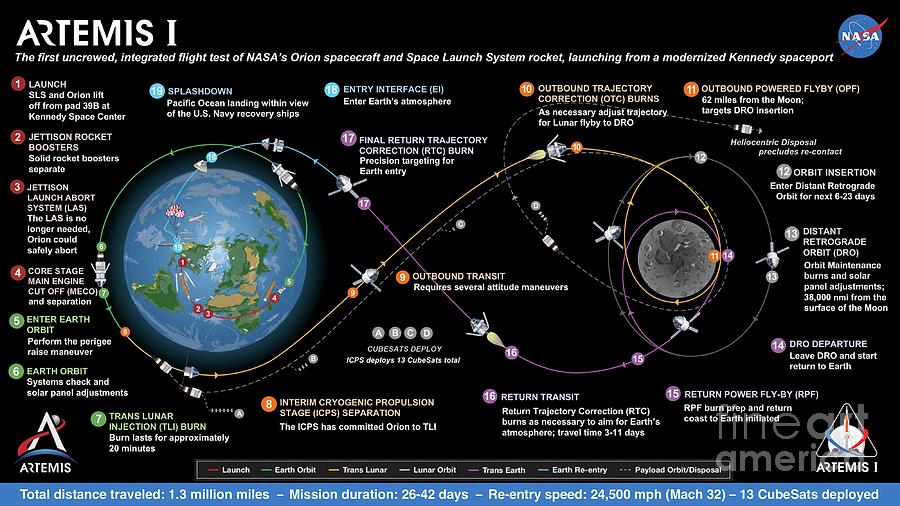
I am interested in the mission to return to the Moon. Although I am not an engineer, my understanding comes from my scientific background—a Bachelor of Science in Biology—and from my interest in the project and from the information I’ve gathered online.
NASA plans to return to the moon by executing five missions. These are planned about a year apart. The goal is to establish a Moon base. This will give humanity a firm foothold in solar system exploration and, hopefully, beyond.

Artemis 1 launched on November 16, 2022. An uncrewed SLS (Space Launch System, NASA’s heavy-lift rocket) traveled around the moon and back to Earth to test the Orion vehicle (NASA’s deep-space crew vehicle) and its supporting ground systems. The mission was successful, ending with Orion’s splashdown in the Pacific Ocean on December 11, 2022.
The Orion used much less fuel because it took advantage of gravity. The spacecraft can loop around the Moon and then return to Earth, using the gravity of both the bodies, the Moon and Earth.
As the Orion approached the Moon, Earth’s gravity slowed it down. The Moon’s gravity swung Orion around its far side and redirected the Orion back toward Earth. On the return, Earth’s gravity accelerated Orion. With this added speed, Orion used a skip re-entry: it dipped into the upper atmosphere to slow down, then bounced back up before descending for the final re-entry. All of this required only minor correction burns (small rocket adjustments).
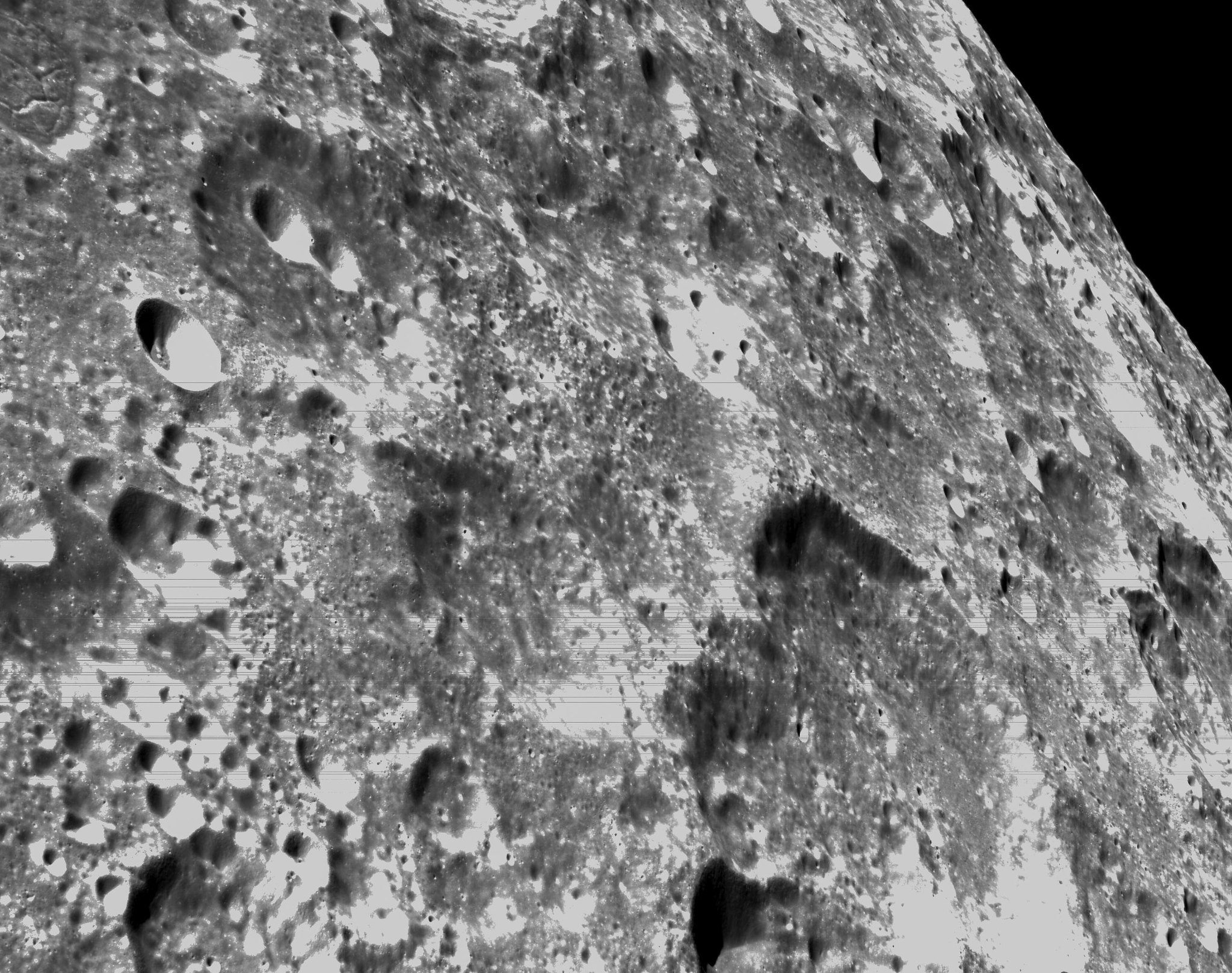
You may wonder, since we went to the moon before, what data had taught them or the need to check out the new equipment, with all that in mind. Since the previous missions were successful, couldn’t they just use the old stuff?
One of the clear upgrades is computing power. Our cell phones now vastly surpass what Apollo 11 had when humans first went to the Moon. It’s both amazing and daunting; earlier astronauts depended more on themselves. The new cabin is 30% larger, and we benefit from all the data gathered since Apollo. These advances keep astronauts safer and permit missions to be more capable.
The specific steps that Artemis 2 was set to achieve:
- Conduct exhaustive studies to determine how the SLS, the crew, and the ground crew operate individually and how their functions integrate as a whole.
- Evaluate the crew habitat, focusing on the new cabin’s increased room for experiments, the expanded space for movement, and the improved visibility through four main windows—two on the docking hatch and two on the side hatch. Collect data on how the crew works together and sleeps in the larger cabin.
- Evaluate how guidance, navigation, and communications work with the SLS, the crew of astronauts, and the ground crew.
Unfortunately, the ground crew noticed a problem early Tuesday morning, the 31st of March, during the ‘wet dress rehearsal’ fueling test in preparation for the April 1st launch. The ground crew fully powered on and fueled the rocket with more than 700,000 gallons of liquid hydrogen and liquid oxygen to get off the ground, but hydrogen leaks were detected at the SLS tail service mast umbilical quick disconnect (say that three times fast) on the launch platform that resulted in aborting the test at T-5 minutes 15 seconds. The technicians were in a troubleshooting mode most of the afternoon on Tuesday. NASA maintained that the wet dress rehearsal was an overall success, with data gathered and the accolade of filling the SLS’s tanks on the first try.
This repeated a problem from Artemis 1 three years ago—a matter of concern since it was never fully fixed. NASA said the leak stayed inside acceptable limits. The ground crew learned from the Artemis 1 fuel leak, but it remained concerning to many laypeople.
Then, the Artemis 2 crew got an alert during the ‘point of no return’ in flight. It warned of a “suspected cabin leak.” However, the leak was later found to be a mistake. Huh?
Next, still on their first flight day, the toilet broke. That toilet was a big deal; no more going in a bag. Now, though, you could still poop but not pee. One of the astronauts, the mission specialist Christina Koch, managed to fix the darn thing after Houston (NASA’s Mission Control Center in Houston, which provides operational support) radioed up instructions to Orion. But they still had to clean up the used urinal bag. The procedure is to dump it overboard, but wait, the astronauts were told to hold off. If the dump were done now, it might push or spin the craft and confuse the ship’s navigation. Early in the morning on April 2, the okay came through to proceed with the dump. Thank goodness!
Because of these incidents, some might think the whole mission was flawed. I did, too—until I recalled a science fiction convention where astronauts related stories of having to ‘MacGyver’9 solutions in space. Problems have always been part of space missions, and NASA doesn’t reveal everything. Space is difficult and dangerous for humans.
Today, problems come with new transparency, even if NASA resists full disclosure. We should applaud those who make everything work. The public usually hears of successes after problems are solved. It seems there’s less patience for education and development. Now, the public expects perfection on the first try. Imagine if we really understood all the effort behind each achievement.
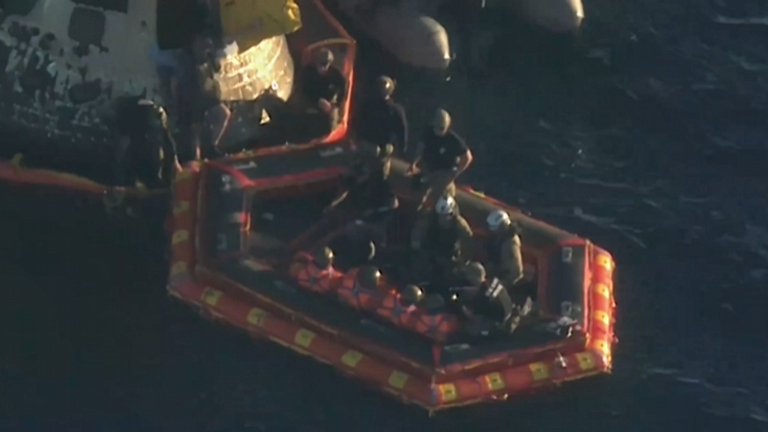
We’ve just concluded Artemis 2. Four astronauts launched on April 1, 2026, orbited the Moon, and returned to the Pacific Ocean on April 10, 2026. The re-entry and splashdown were perfectly timed.
.jpg?crop=3:2,smart&width=640&quality=65)
So what did Artemis 2 accomplish? There are amazing visuals of the Earth and the far side of the Moon that no other humans have seen, and, of course, they have added to our knowledge of the Moon. Two craters were named, got a real, private bathroom, and received extensive data on radiation during travel over the Moon, as well as on the performance of the SLS and communications with Earth for ensuing missions with human beings. Not too shabby.
I am glad that NASA is pursuing this project. It’s important, and though these first two missions may not seem thrilling, going to space is dangerous and requires many careful tests to keep everyone safe. Establishing a Lunar Base and, one day, a colony has been a human dream for centuries. I hope we reach this milestone without mishap.
The End
©J M Strasser All Rights Reserved April 2026
Sources
1, https://www.nasa.gov/humans-in-space/artemis/
2. https://www.space.com/artemis-1-going-back-to-the-moon
5. https://www.nasa.gov/humans-in-space/orion-spacecraft/orion-fact-sheets/
6. https://www.space.com/artemis-2-humans-moon-orbit
9. MacGyver is the title character and the protagonist in the TV series MacGyver. He is played by Richard Dean Anderson in the 1985 original series. Lucas Till portrays a younger version of MacGyver in the 2016 reboot. https://en.wikipedia.org/wiki/MacGyver
Images
3. https://cdn.mos.cms.futurecdn.net/YXFbDGeKoX3e9uyKuWt8fb.jpg
5. https://e3.365dm.com/26/04/768×432/sky-news-nasa-arte-artemis-ii_7216681.png?20260411031245